“Quiet: The Power of Introverts in a World That Can’t Stop Talking” Promotes Understanding and Greater Communication
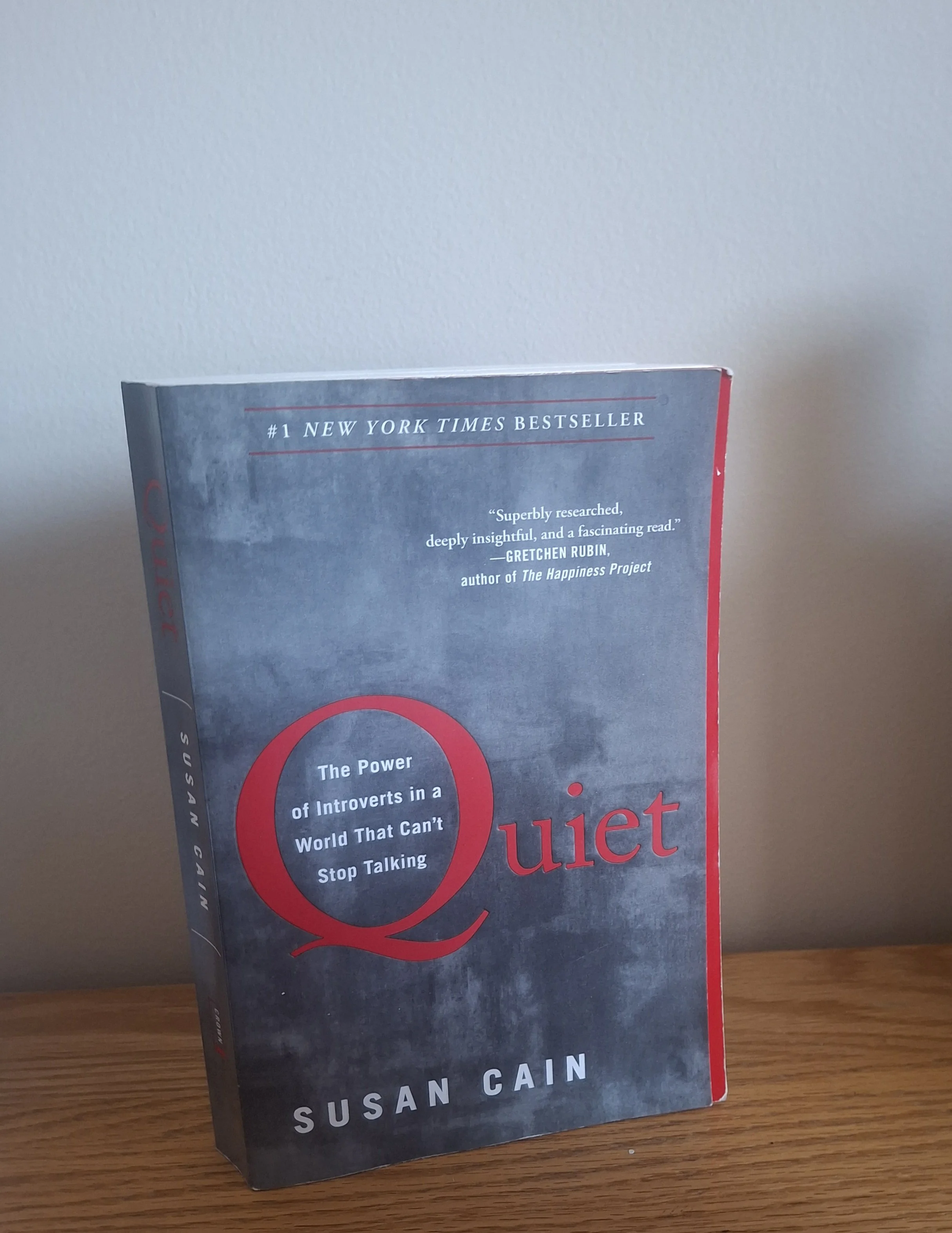
“Within the pages of “Quiet”, Susan Cain highlights the power of introverts in a society that tends to value extroversion showing the beauty in every type of temperament (Jadyn Jacobs).
February 2, 2026
Jadyn Jacobs, Editor-in-Chief
Within the pages of “Quiet”, Susan Cain highlights the power of introverts in a society that tends to value extroversion showing the beauty in every type of temperament.
Cain begins by discussing “The Extrovert Ideal” bringing to light how and why our society has come to favor extroverts, why introverts should be valued as leaders and why collaboration kills creativity. The next section discusses the biology of introversion and extroversion like whether or not temperament is fixed, the relationship between introversion and sensitivity and how introverts and extroverts think differently.
The third part looks beyond western culture and how the extrovert ideal does not exist in all societies. The last part goes over when to act extroverted, the difference between the way extroverts and introverts communicate and educating introverts in a way that fosters their unique talents.
This book was a great read! It was well researched and had a good amount of data as well as personal stories to support each point Cain makes. Cain walks the reader through the intricacies in temperament and addresses the complexity in labels like introvert or extrovert.
As an introvert, this book helped me reach a new understanding of my mind and the way I move through the world. It helped me accept my introversion, not as a flaw, but just a part of me. A thing that contributed to both my strengths and my weaknesses.
Learning these facts empowered me to not ignore and feel shame about my need for calm, my aversion to working with others or taking “me time”. In the past, I would feel horrible for choosing to listen to music in my room instead of going out with friends, or saying I wasn’t available for a meeting in order to have a few minutes to myself to regroup. Now I’m working on accepting that I operate as an introvert, and that I will function much better if I don’t ignore my needs.
Finally this book is not only helpful for introverted people. It explains both temperaments and discusses variations between the two ends of the spectrum. After all no one is completely one or the other as Cain, quoting Carl Jung, said
“There is no such thing as a pure extrovert or a pure introvert. Such a man would be in the lunatic asylum” (Cain 14).
Lastly, I think this book makes some interesting points about education in terms of fostering leaders, collaboration/creativity and “how to cultivate quiet kids”. The second chapter in “Quiet” discusses leadership and the strengths of introverted leaders despite society tending to follow those who are extroverted. This chapter proves through each scenario that the loudest person in the room isn’t necessarily the one with the best ideas.
Cain quoting management theorist Jim Collins says “We don’t need giant personalities to transform companies. We need leaders who build not their own egos but the institutions they run” (Cain 55).
In school, you are encouraged to lead by being boisterous, friendly and confidently expressing your ideas. However some of the best leaders are quiet, they allow other people to share their ideas and they lead by example. As demonstrated by the quote above, what matters in terms of being a good leader is caring about the work and the good of everyone more than your own ego. These are the traits that should be fostered in schools, simply being taught how to communicate and be a good person is what will create great leaders.
Schools are also organized with a surplus of group work, and sometimes group work isn’t the best way to accomplish something. In the third chapter of “Quiet”, Cain discusses collaboration and creativity. Cain goes over studies that show that things like brainstorming groups aren’t effective at all.
“Studies have shown that performance gets worse as group size increases” (Cain 88).
If that’s the case then asking a whole class of about 20 students to come up with an answer to a question or to solve a problem is ineffective if you're looking for a creative answer. Of course there are times when being in a group can help discussions, which Cain also discusses in this chapter.
The last chapter of the book discusses how to raise quiet kids with a section for teachers on how to foster quiet kids in their classrooms. A few of Cain’s points that stood out to me are introversion isn’t something that needs to be cured, how to help introverted kids navigate collaborative work and teaching all kids how to work independently as well as in a group.
All of the points above not only made me think about my own schooling, but also pushed me to make an effort to think about these things when I enter a classroom. I have had many teachers who I felt did not value my introverted nature, and I try to not make the same mistake when I am in a classroom. I encourage everyone who is in education in any capacity to think about these things and read “Quiet”.
Overall I very much enjoyed all the information and stories in “Quiet”. I highly recommend reading this book and watching Cain’s Ted Talk on introversion, which you can find on Youtube.